
What a Marketing Funnel Is and How It Applies to an Online Store
A marketing funnel is a picture of the customer journey, and businesses use it to shape campaigns around where each customer is in that journey. The…
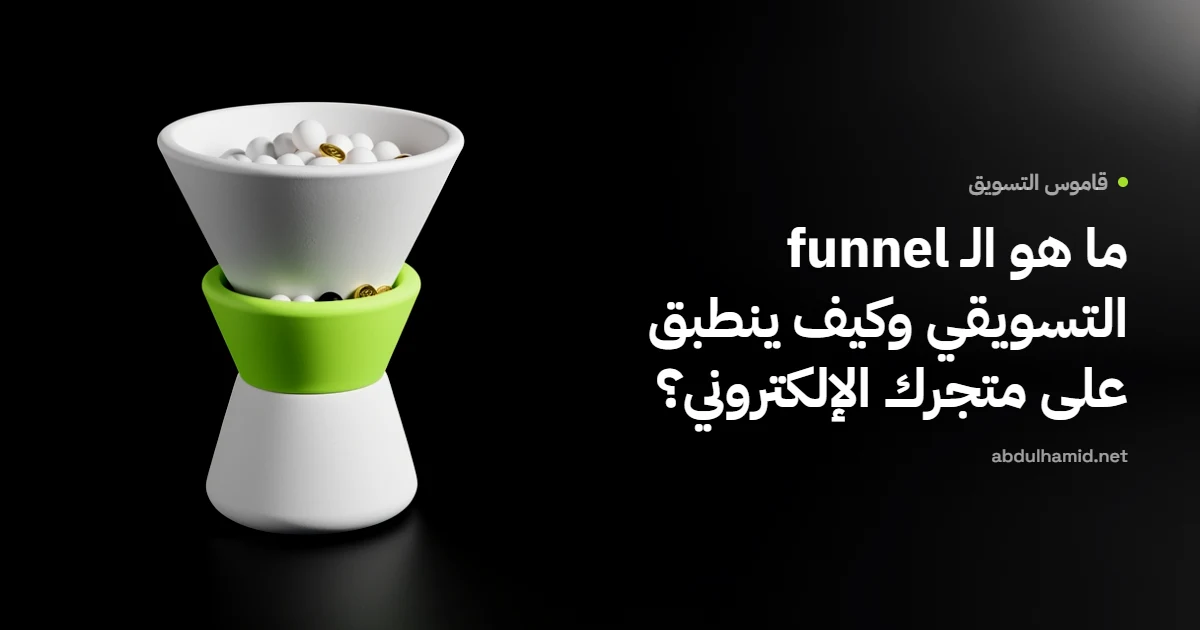

What is a marketing funnel?
Shopify defines a marketing funnel as a visual representation of the customer journey that businesses use to shape their campaigns (1). It is called a funnel because the number of people shrinks at each step. Many people see your ad, fewer visit the store, and fewer still buy.
The core idea is simple: what works for someone discovering your store for the first time may not work for an existing customer (1). One ad with one message for everyone is not enough. You need a message that fits each stage of the journey.
The funnel stages in an online store
Shopify splits the funnel into three main stages, and some marketers add two post-purchase stages after them (3):
- Awareness: a person learns about your store, or about the problem your product solves, for the first time.
- Consideration: they compare your product with alternatives and look for reasons to buy or not.
- Conversion: they place the order and become a customer.
- Loyalty: an existing customer comes back and buys again (3).
- Advocacy: a satisfied customer promotes your store through referrals or positive reviews (3).
Ad platforms build their campaigns around the same split. TikTok, for example, groups campaign objectives in TikTok Ads Manager into three categories that match awareness, consideration and conversion (4). Understanding the stages therefore makes it easier to pick the right campaign objective when you launch.
Content and ads that fit each stage
- Awareness: content that introduces your store and the problem your product solves, such as short videos showing the product in use and written content that ranks in organic search. The aim is to get attention, not to ask for the sale right away.
- Consideration: content that answers a hesitant buyer's questions: product details, how to use it, reviews, shipping and returns. This is also where you grow your email list so you can stay in touch with interested people (2).
- Conversion: ads that push people to complete the order. Retargeting ads work particularly well here because they reach people who already visited the store and remind them of the products they looked at (5). To run them on Meta, a Shopify store needs to add the Meta pixel (5).
- Loyalty and advocacy: messages to existing customers, such as products that complement what they bought, and a review request once the order arrives. Positive reviews and referrals are the core of the advocacy stage (3).
Which metric measures each stage?
Shopify suggests one goal for each funnel stage (2):
- Top of the funnel: more organic-search impressions and more website traffic.
- Middle of the funnel: a bigger email list with better open and click-through rates.
- Bottom of the funnel: more sales.
Across the whole funnel, Shopify recommends tracking CAC and LTV, and says that keeping the approach profitable requires CAC to stay below LTV (6). LTV is the metric that shows how strong your post-purchase stages are. The more often a customer comes back, the higher their value, and the more you can afford to pay to acquire new customers.
A common mistake is judging an awareness campaign by the sales it brought in directly. Each stage should be measured against its own goal, not the goal of the stage after it.
How AOV decides where to put your weight
Not every store should spread its effort evenly across the stages. Shopify says AOV should decide how much weight each stage gets, because customers think longer about large purchases (7).
- With a low AOV, the consideration phase is short, so it makes more sense to put more into awareness to win new customers (7).
- With a high AOV, customers usually need more time and more information before buying, so consideration content carries more weight.
Start by knowing your store's average order value before you decide how to split your budget and content across the funnel.
How to start applying the funnel to your store
- Give each campaign one stage to serve, and before launch ask: what do I want people to do when they see this ad?
- Separate your audiences: people who do not know your store yet, people who visited but did not buy, and people who already bought. Each group needs a different message (1).
- Pick a clear metric for each stage, using the goals Shopify suggests as a starting point (2).
- Review CAC against LTV every month to make sure the whole funnel stays profitable (6).
- Do not stop at the first order. The loyalty and advocacy stages turn an existing customer into a repeat buyer and a source of new customers (3).
Sources
- (1) Shopify · 2026-05-28
- (2) Shopify · 2026-06-29
- (3) Shopify · 2026-06-29
- (4) TikTok for Business · 2025-10
- (5) Shopify · 2026-05-28
- (6) Shopify · 2026-06-29
- (7) Shopify · 2026-05-28
Does a small store need a full funnel?
What is the difference between consideration and conversion?
In consideration the customer is interested but still comparing and hesitating, and the goal is a bigger email list with better open and click-through rates. In conversion the goal is the sale itself (2).
Are retargeting ads enough on their own?
No. Retargeting works well at the bottom of the funnel because it reaches people who already visited the store (5). But it depends on new visitors coming in first, and those come from awareness and consideration campaigns.
How do I know my funnel is profitable?
Shopify recommends tracking CAC and LTV together, and says profitability requires CAC to stay below LTV (6).
Does the customer journey end at the first purchase?
No. Some marketers add a loyalty stage after conversion, where existing customers buy again, and an advocacy stage, where satisfied customers promote the store through referrals or positive reviews (3).
Want this applied to your own accounts?
Book a Growth AuditRelated articles

What Is a Digital Marketing Job? Tasks, Skills and Gulf Pay
Digital marketing brings in customers who buy at a cost the business can afford, then brings them back to buy again. It does this through ads, content,…
Read the post →
Paid Ads Glossary: CPM, CPC, CTR, CPA and More, Explained Simply
CPM, CPC, CTR, CPA, ROAS and CAC each answer a different question about a campaign. They tell you what it costs to be seen, whether people respond to the…
Read the post →
Media Buying vs Social Media Management: What's the Difference?
Social media management builds and runs your store's presence on social platforms: content, scheduling, replies and community. Media buying spends your…
Read the post →
Comments (0)
No comments yet. Be the first to comment.